Odyssey 22
The time has come for Hector to die at the hands of Achilles, and his final moments of life are singularly grim. Achilles shows him no mercy, expressing the most brutal thoughts even before he vengefully finishes off the killer of Patroklos. Hector is forced to know in advance, before he loses consciousness to the death blow from Achilles, that his executioner intends to mutilate his corpse instead of allowing for a proper funeral. And the form of this mutilation is particularly horrific and morally shocking: attaching the body of Hector to the back of his chariot, Achilles will drag it around the walls of Troy for all to see the humiliation of his hated enemy. Is there any hope, then, for transcending such degradation? Only divine intervention, in the story yet to be told, could prevent the disfigurement of a heroic body’s beauty in death. But the story of transcendence must wait. For now, the focus is on the horror and the sorrow of a heroic death as seen through the eyes of Hector’s lamenting widow Andromache.
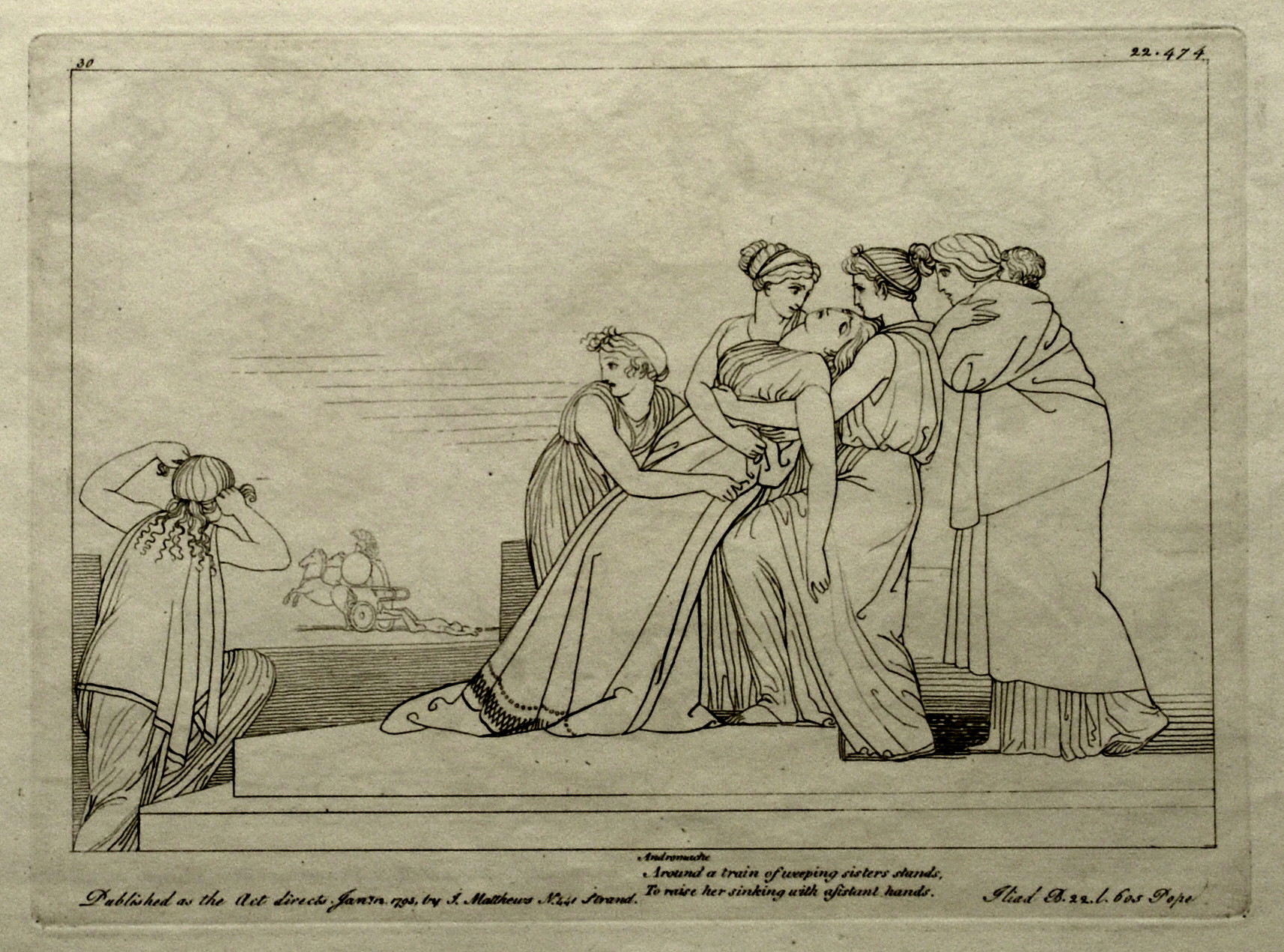
Copperplate etching (1795) by Tommaso Piroli, after a drawing (1793) by John Flaxman.
Image via Wikimedia Commons.
